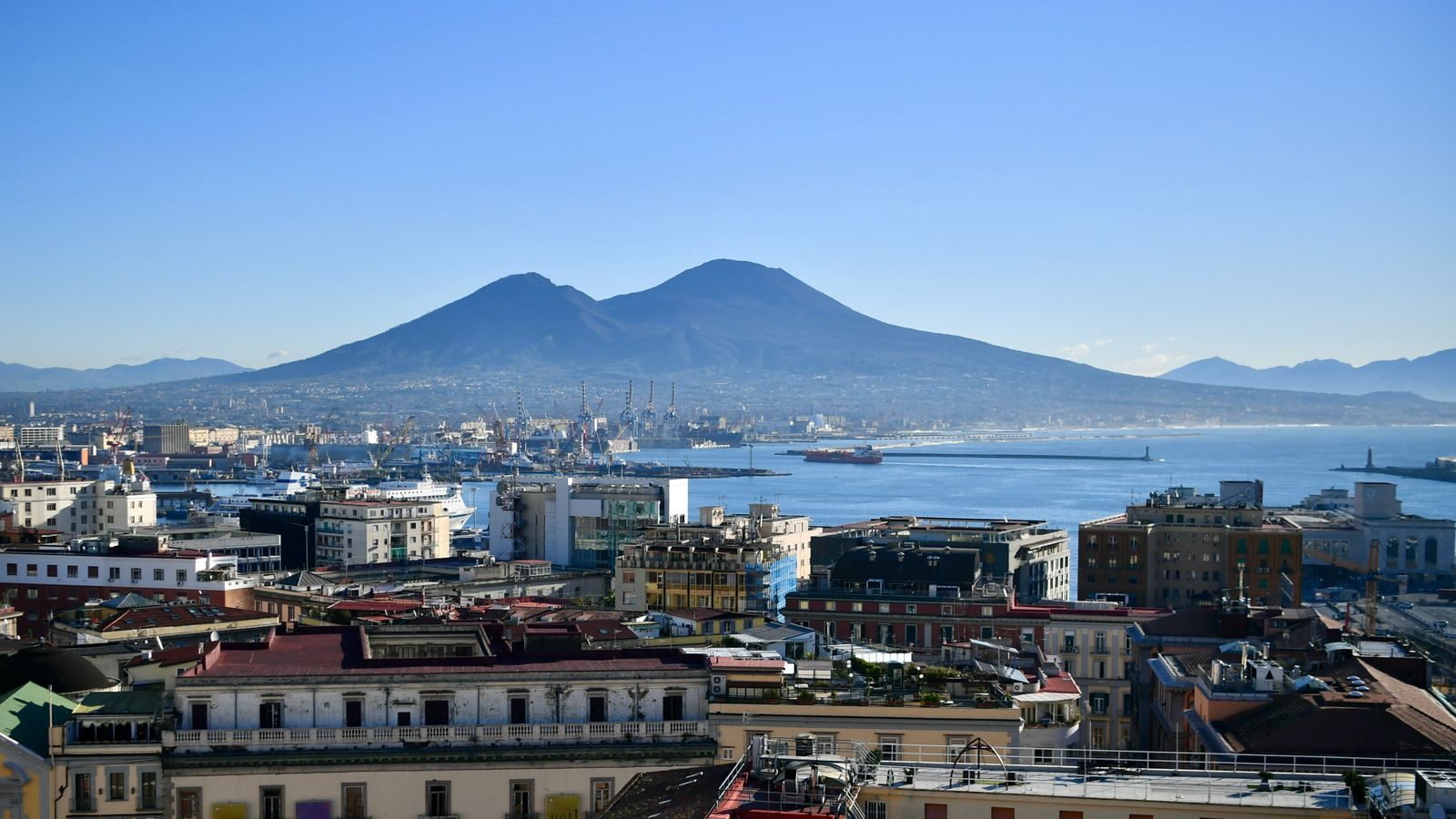
Stay around Via Toledo and Piazza Municipio for a first visit, the metro and the ferries, the Centro Storico for old streets and the best pizza, Chiaia and the Santa Lucia seafront for a calmer and more elegant stay, and Vomero for views and a residential feel. Stay near Napoli Centrale only if you have a very early train.
Naples is loud, dense, generous and unlike anywhere else in Italy. The right neighbourhood is the difference between loving it from the first evening and needing a day to adjust.
The quick answer
| Area | Best for | The feel | The trade-off |
|---|---|---|---|
| Toledo and Municipio | First visit, ferries, metro | Central, busy shopping streets | Busy and noisy by day |
| Centro Storico | Atmosphere, pizza, churches | Dense, historic, lively | Loud, crowded, narrow lanes |
| Quartieri Spagnoli | Street life, value | Tight lanes off Via Toledo | Noisy, scooters everywhere |
| Chiaia and Santa Lucia | Calm, seafront, dining | Elegant, residential, by the bay | A walk from the historic centre |
| Vomero | Views, a local feel | Hilltop, residential | Funicular or metro to the sights |
| Station area | An early train | Practical | The least pleasant area at night |
Toledo and Municipio: the easy first base
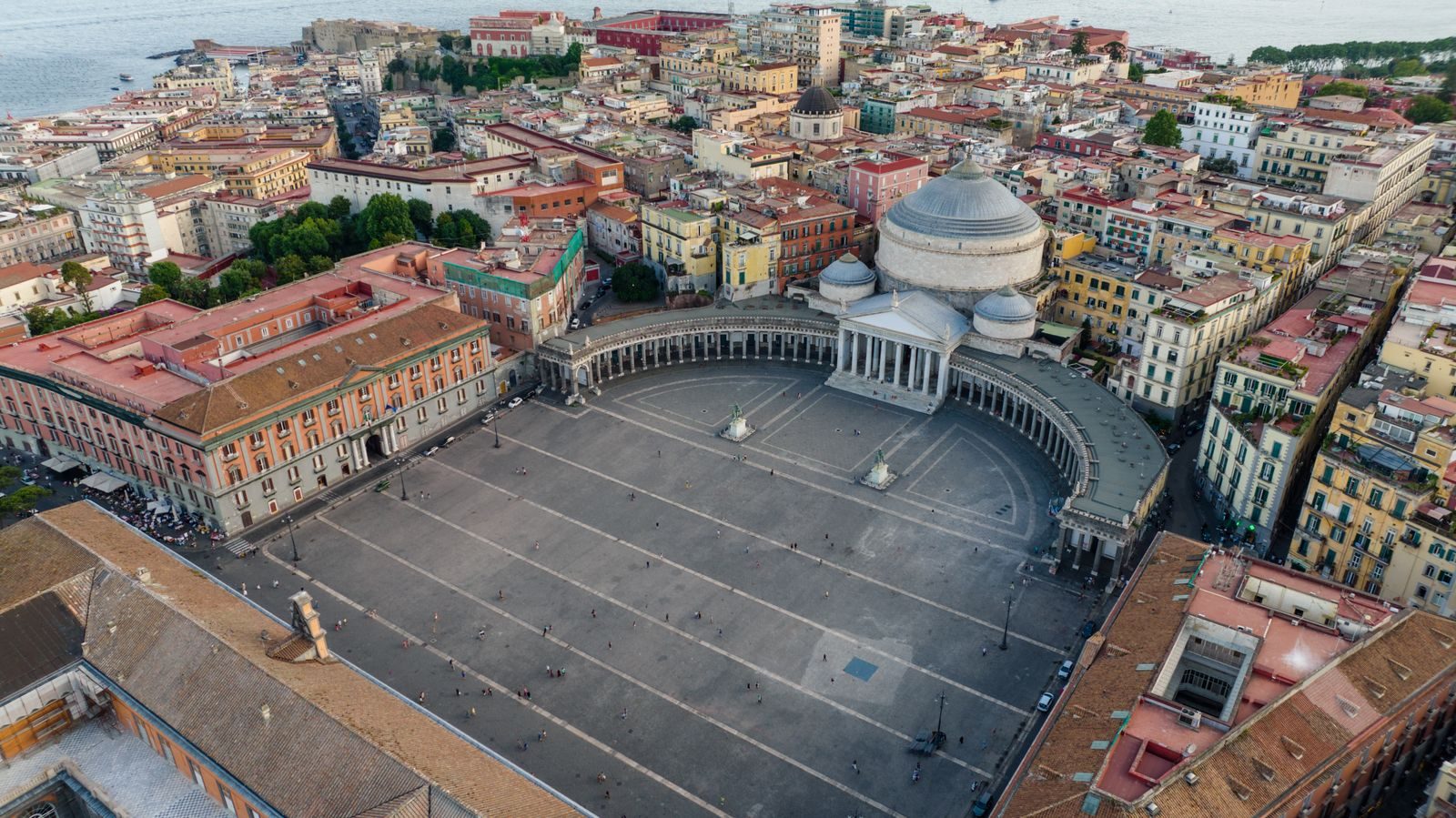
Via Toledo is the long shopping street that runs through the middle of the city, with a metro line beneath it. Its Toledo station is famous in its own right for its deep-blue mosaic hall. From here the historic centre is a short walk north, while Piazza del Plebiscito, the Royal Palace and the seafront are a short walk south. Piazza Municipio next door leads to the port at Molo Beverello, where the ferries and fast boats leave for Capri, Ischia, Procida and Sorrento. For a first visit with day trips, nothing is more practical.
Where to book:
- Stays around Via Toledo (central, on the metro)
- Stays near Piazza Municipio (close to the ferries)
See nearby: Ride down to the mosaic hall of Toledo station, walk to Piazza del Plebiscito, and book a boat trip to Capri from the port.
Centro Storico: the city at full volume
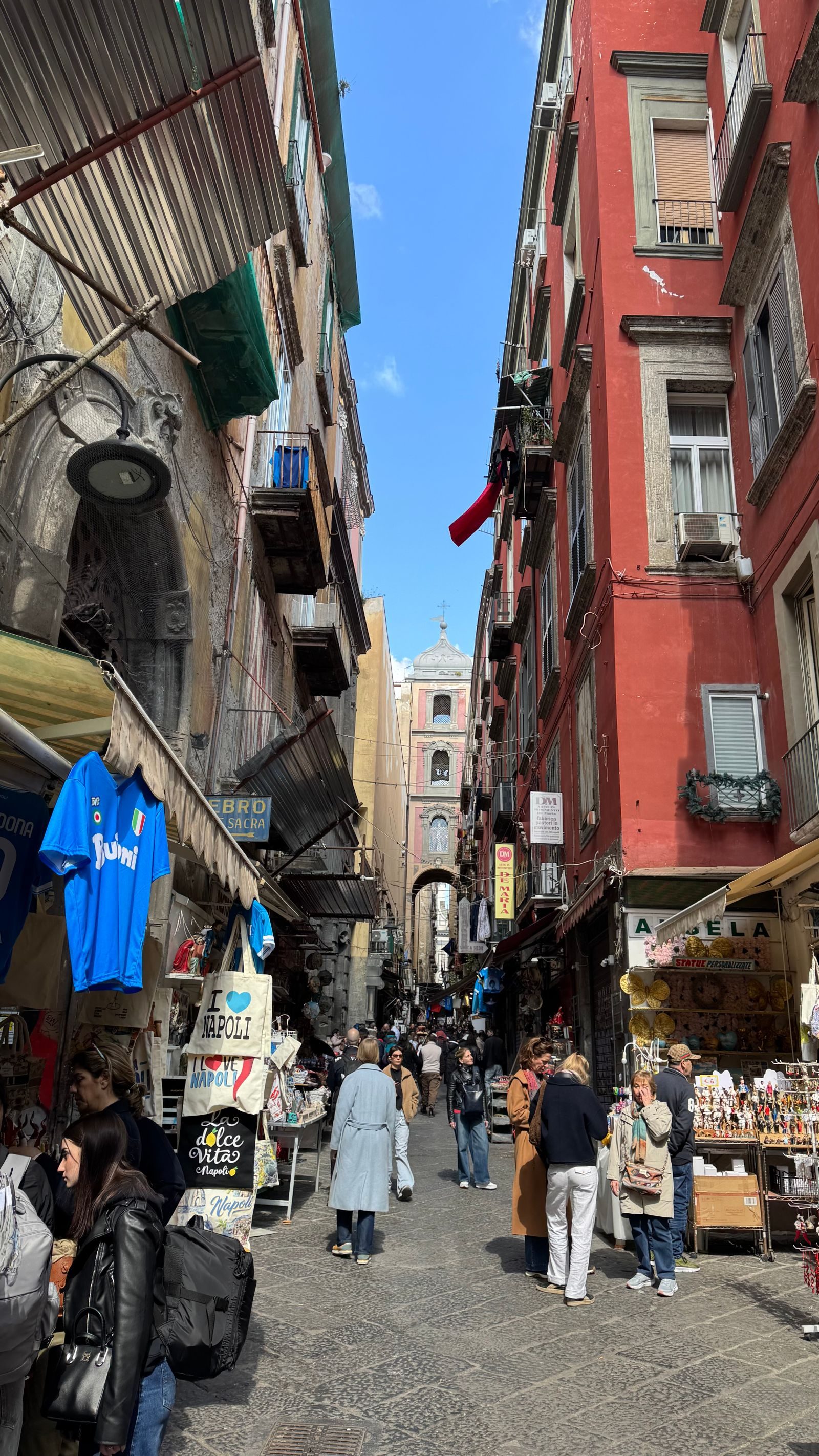
The Centro Storico is a UNESCO World Heritage site and the beating heart of Naples: the narrow streets of Spaccanapoli and Via dei Tribunali, shrines on every corner, churches every few steps, and the pizzerias that made the city famous. Stay here to step straight into it. It is loud, crowded and alive until late, so it suits travellers who want atmosphere more than quiet.
Where to book:
- Stays in the Centro Storico (old streets, pizza on every corner)
See nearby: See the Veiled Christ in the Sansevero Chapel, walk Via San Gregorio Armeno with its nativity workshops, and go under the streets on a Naples underground tour.
Quartieri Spagnoli: street life and value
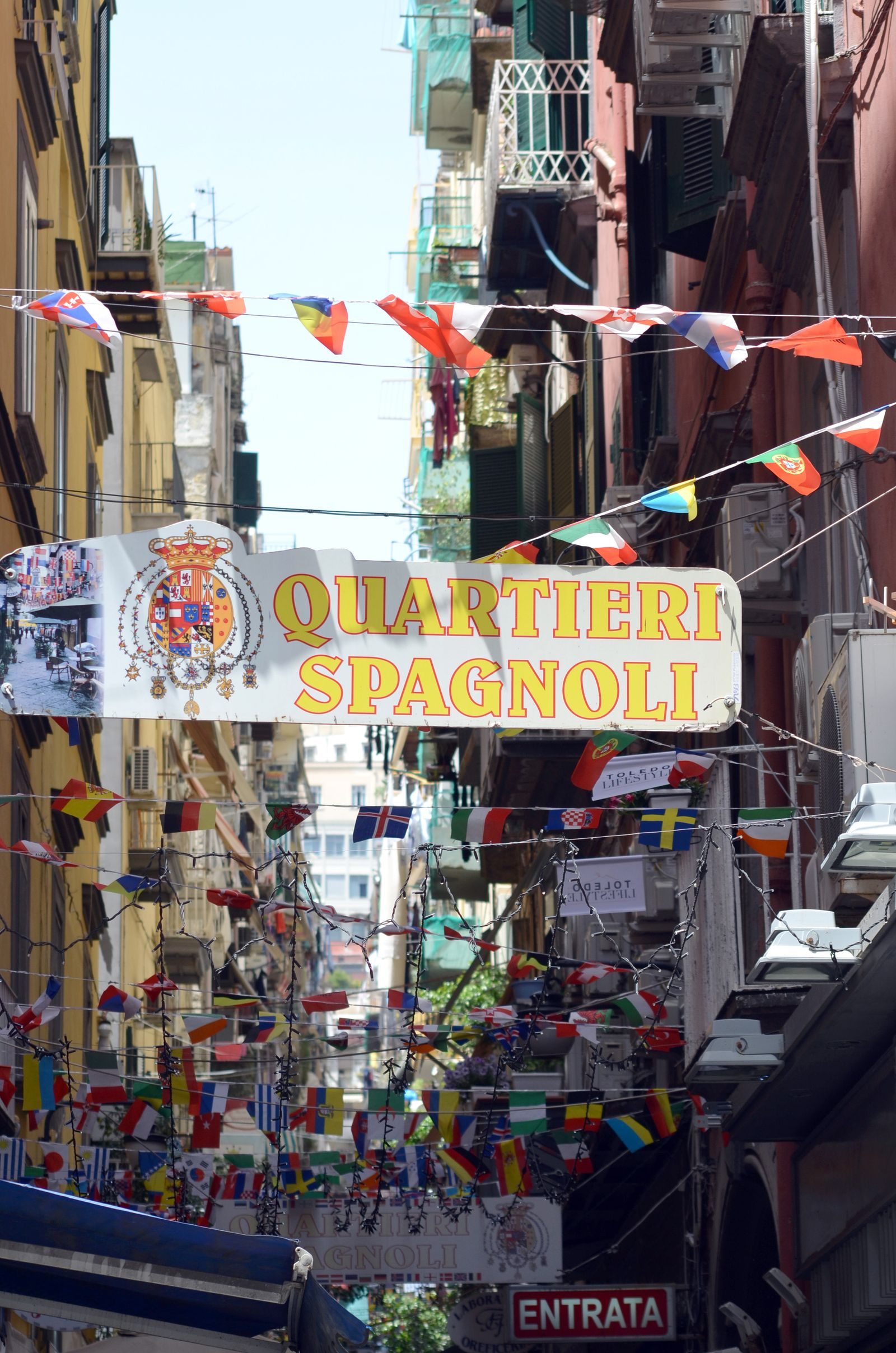
Just west of Via Toledo, the Spanish Quarter is a grid of tight lanes strung with laundry, scooters and small trattorias, with the famous Maradona mural at its heart. It has changed fast, and now has plenty of guesthouses and apartments at good value. It is noisy and very lively; book a room on an upper floor or away from the busiest lanes.
Where to book:
- Stays in the Quartieri Spagnoli (lively, good value)
Chiaia and Santa Lucia: calm by the sea
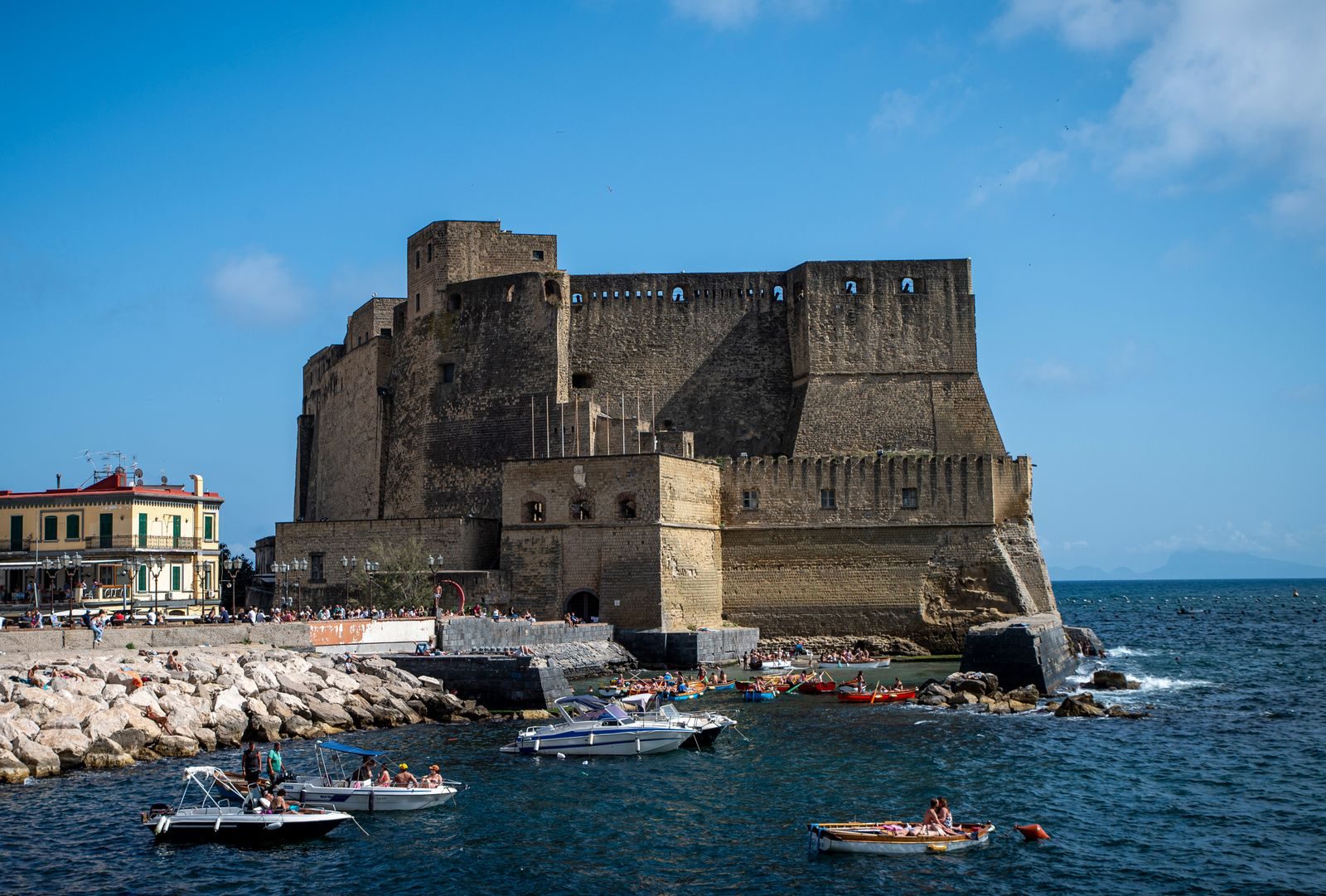
Chiaia is the elegant side of Naples: boutiques, wine bars and quieter residential streets running down to the seafront promenade, the Lungomare. Santa Lucia, at its eastern end, has the classic seafront hotels facing the Castel dell’Ovo, with Vesuvius across the bay. It is the calmest central area to stay in, and a lovely place to walk in the evening, with the historic centre about twenty to thirty minutes away on foot.
Where to book:
- Stays in Chiaia (elegant, quieter, near the seafront)
- Stays in Santa Lucia (seafront hotels, views of Vesuvius)
See nearby: Walk the Lungomare at sunset to the Castel dell’Ovo, and have an aperitivo in the lanes of Chiaia, where the city slows down a little.
Vomero: views from the hill
Above the centre, Vomero is a calm, residential hilltop district linked to the city below by funiculars and the metro. Castel Sant’Elmo and the Certosa di San Martino have the best panoramic views in Naples. It is less touristy and good value, but every visit to the sights starts with a ride down the hill.
Where to book:
- Stays in Vomero (residential, views, funiculars)
Near the station: only for an early train
The area around Napoli Centrale and Piazza Garibaldi is practical: high-speed trains to Rome and the Circumvesuviana line to Pompeii and Sorrento leave from here. It is also the least pleasant part of the centre at night. Stay here only for an early departure, and otherwise choose Toledo or the Centro Storico, which are a short metro ride away.
Which base for your trip?
- First visit: Toledo and Municipio.
- Atmosphere and food: the Centro Storico.
- A calm, elegant stay: Chiaia or Santa Lucia.
- Value and street life: the Quartieri Spagnoli.
- Views and a local feel: Vomero.
- Day trips to Capri and Sorrento: Municipio, near the port.
Getting around and day trips
Naples runs on its metro, funiculars, trains and ferries. Pompeii and Herculaneum are on the Circumvesuviana line towards Sorrento; book Pompeii tickets or a guided visit ahead in high season. Ferries from Molo Beverello reach Capri, Ischia, Procida and Sorrento, and in summer some boats continue to Amalfi and Positano. A car is a burden in the city, with chaotic traffic, limited-traffic zones and scarce parking; rent one only for touring inland Campania, through DiscoverCars.
Spring and autumn are the best months: warm, bright and far more comfortable than the heat of July and August.
A note on how we write about cost: we do not publish exact prices, because they move with the season. As a rule, Naples is noticeably better value than Rome, Florence or Venice for a similar standard, and much better value than staying on the Amalfi Coast itself.
Heading to the coast next? See where to stay on the Amalfi Coast, and if Rome is on the same trip, where to stay in Rome.
Watch the films
Give Naples two nights at least: the first to take it in, the second to fall for it.