Base yourself in Positano for the iconic view and the postcard setting, Amalfi town for a central, well-connected base, Ravello for quiet and the best views, Sorrento for transport links and value, and Praiano, Maiori or Minori for a calmer, gentler-priced stay. The Amalfi Coast is a string of cliffside towns along one winding road, so where you stay shapes your whole trip: a scenic perch to settle into, or a connected hub to explore from.
Here is each town, who it suits, where to book, and what to do nearby.
The quick answer
| Town | Best for | The feel | The trade-off |
|---|---|---|---|
| Positano | The view, the postcard | Vertical, glamorous, scenic | Priciest; steep; small |
| Amalfi town | A central base | Lively hub, best connections | Busy around the centre |
| Ravello | Quiet, views, refinement | Serene, high above the sea | Up the hill, away from a beach |
| Sorrento | Transport, value | Flat, lively, well connected | Not on the coast proper; no cliff setting |
| Praiano / Maiori / Minori | Calm, value, beaches | Local, quieter, relaxed | Fewer sights; quieter evenings |
Positano: the postcard, if you can take the steps
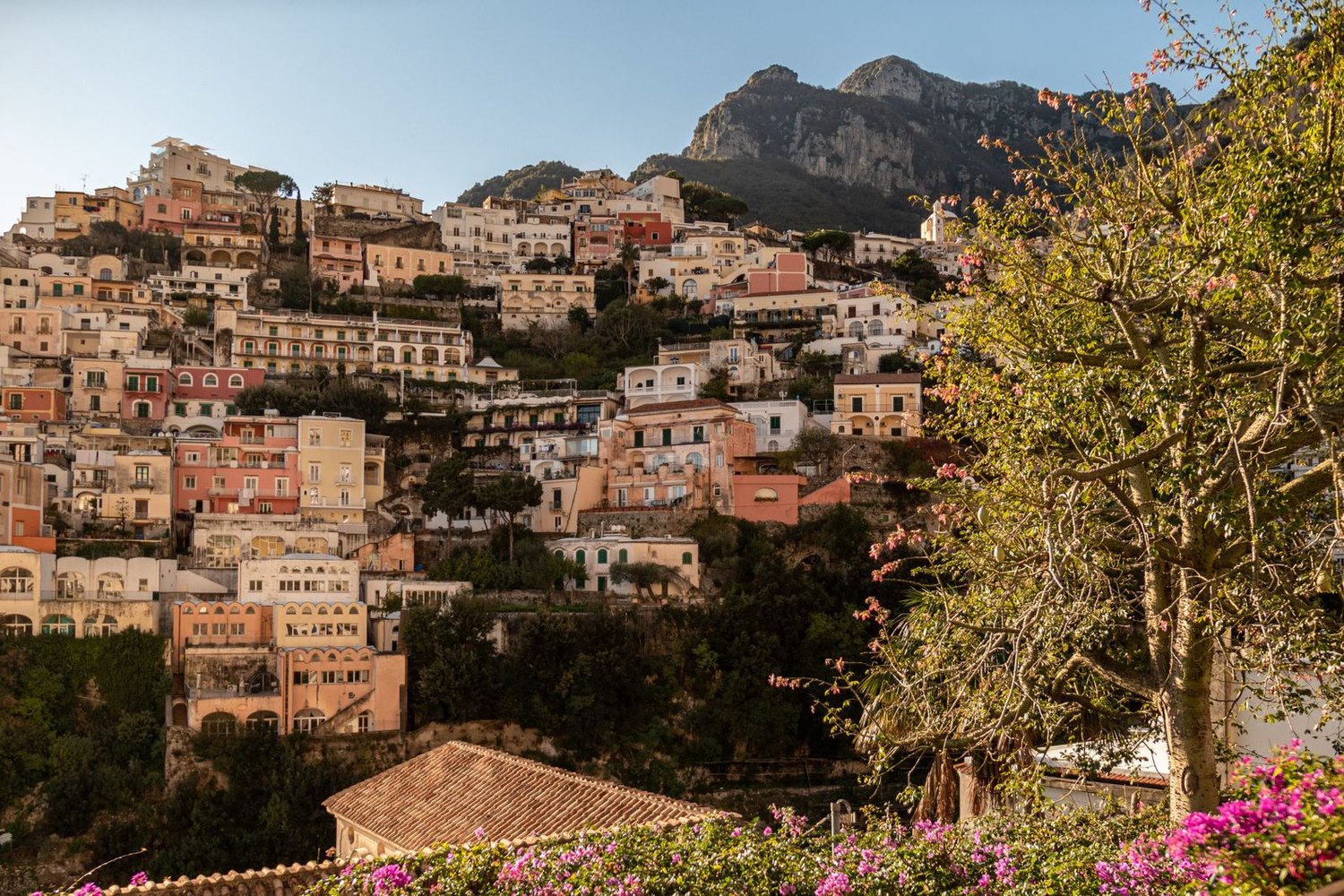
Positano is the image everyone has of the Amalfi Coast: pastel houses stacked up a near-vertical cliff, bougainvillea everywhere, and a small beach at the bottom where it all tips into the sea. It is the most beautiful and the most glamorous town on the coast, and a few nights here are unforgettable.
The trade-offs are real: it is the most expensive town, it is small on things to do beyond the setting itself, and it is genuinely steep, so every outing involves hundreds of steps up and down. Pick it for the view and the atmosphere, and book accommodation with the access you want, whether that is near the beach or high up for the panorama.
Where to book:
- Stays in Positano (the cliffside view, the main beach)
- All Amalfi Coast hotels and apartments
Eat and see nearby: Walk the Path of the Gods trail high above the coast for the view of a lifetime, take a boat tour along the coast and to Capri from the beach, and watch the sunset from a terrace with a drink.
Amalfi town: the central, connected base
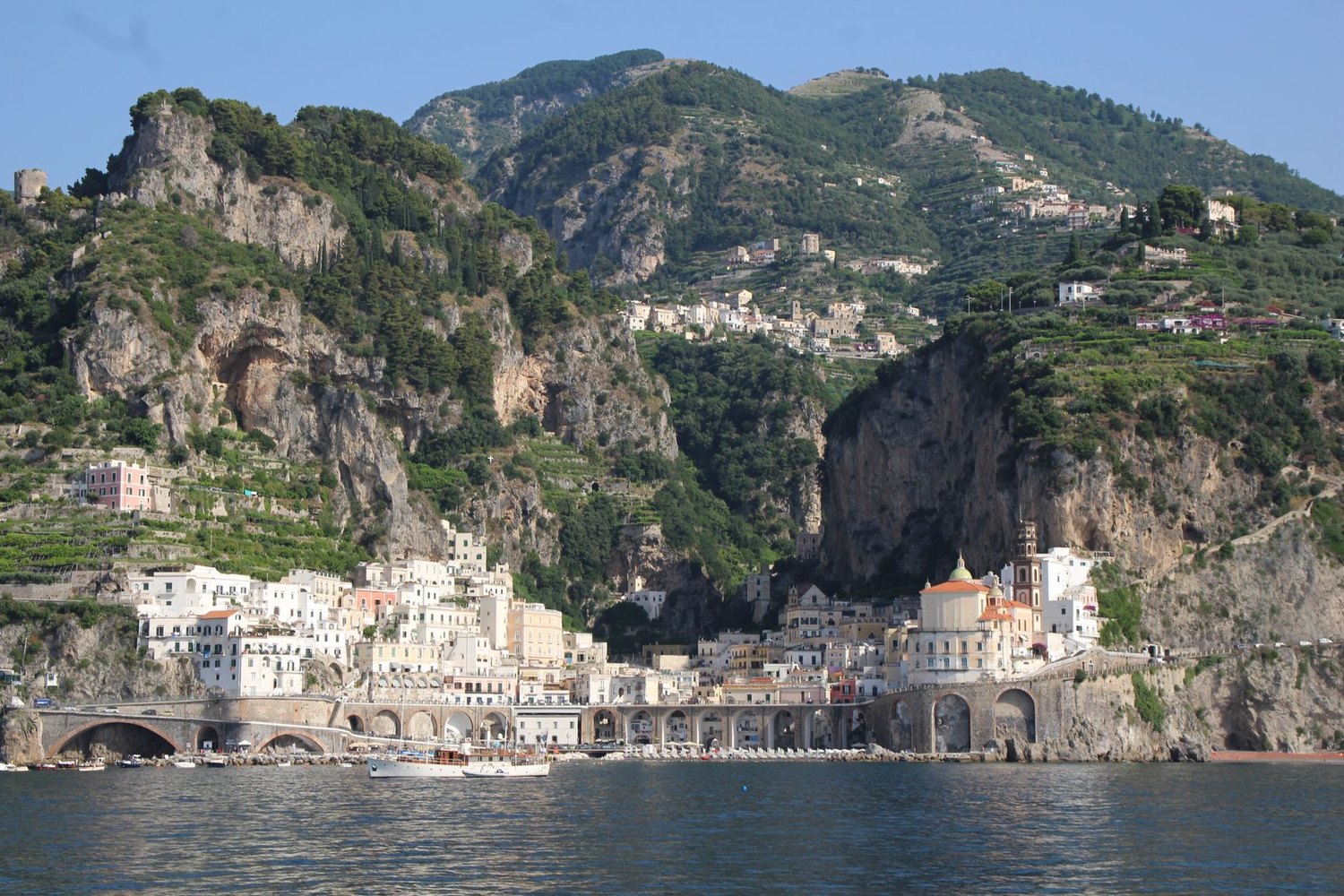
Amalfi sits in the middle of the coast, and that location is its strength: it has the densest ferry and bus connections, a striking cathedral at the top of its main square, a proper town centre with shops and restaurants, and a more level layout than Positano. It is the easiest base if your plan is to move around and see several towns, with Positano, Ravello and the smaller villages all short hops away.
Where to book:
- Stays in Amalfi town (central, best ferry and bus links)
Eat and see nearby: See the striped Cathedral of St Andrew and its cloister, ride the ferry up to Positano or across to Capri for the day, and taste the local lemon specialities the coast is famous for. Amalfi is the handiest launch point for coast and island boat trips.
Ravello: quiet, refined, high above the sea
Perched in the hills above Amalfi, Ravello is the coast’s serene, cultured retreat: famous gardens at the Villa Rufolo and Villa Cimbrone, their belvederes floating over the sea, and a summer music festival. It is calmer and more refined than the coastal towns, with the best long views on the whole coast, though it sits up the hill away from a beach and runs quiet in the evenings. A lovely pick for peace and panoramas over nightlife.
Where to book:
- Stays in Ravello (gardens, the best views, quiet)
Eat and see nearby: Walk the gardens of Villa Rufolo and Villa Cimbrone for the famous terrace views, catch a concert in summer if the festival is on, and take the walking path down to Amalfi through the lemon groves.
Sorrento: the practical base, best value and links
Strictly on the peninsula just before the Amalfi Coast begins, Sorrento is the most practical base of all: flat and easy to walk, lively year-round, and the best connected point in the region, with the Circumvesuviana train to Naples, Pompeii and Herculaneum and ferries to Capri and along the coast. It is noticeably better value than the coast towns and a smart choice if you want to explore widely, accepting that it lacks the dramatic cliffside setting.
Where to book:
- Stays in Sorrento (flat, well connected, better value)
Eat and see nearby: Day-trip to Pompeii and Mount Vesuvius on the easy train line, take the ferry to Capri for the day, and stroll the old town’s lanes in the evening when the day crowds have gone. From Naples, the fast train reaches Rome in about an hour if you are tacking the coast onto a wider trip.
Praiano, Maiori and Minori: calm, value and beaches
For a quieter, gentler-priced stay, look to the smaller towns. Praiano, between Positano and Amalfi, has the same sea views and sunsets with fewer crowds and often better value. Maiori and Minori, east of Amalfi, are flatter, with real sandy beaches and a relaxed, local feel that the headline towns have lost. All are on the ferry and bus routes, so you trade a little buzz for calm and a fairer price.
Where to book:
- Stays in Praiano (sea views, quieter, between Positano and Amalfi)
- Stays in Maiori and Minori (sandy beaches, flatter, better value)
Eat and see nearby: Swim from the easy beaches at Maiori and Minori, watch the sunset from Praiano, which faces west better than most of the coast, and use the ferries to dip into the busier towns for a day without paying to sleep there.
Which base for your trip?
- First time, for the view: Positano, for a few scenic nights.
- Exploring the whole coast: Amalfi town or Sorrento, for the connections.
- Quiet, views and refinement: Ravello, up in the hills.
- Transport, Pompeii and value: Sorrento.
- Calm and beaches on a budget: Praiano, Maiori or Minori.
- A mix: many visitors split, a couple of nights in Positano and the rest in a connected base like Amalfi or Sorrento.
Getting around: ferries beat the road
In season, the ferries are the best way to travel the coast: fast, scenic, and free of the traffic that chokes the single coast road all summer. The SITA buses connect every town as a backup, though they are slow and crowded at peak times. Driving the coast road is spectacular but stressful, with tight bends, heavy traffic and scarce, costly parking, so many visitors skip a car entirely. If you want one only to reach the area or to explore the hill villages on your own schedule, rent at Naples and weigh dropping it once you arrive rather than paying to park it all week.
A note on how we write about cost: we do not publish exact prices, because they move hard with the season, and the Amalfi Coast is one of the most seasonal destinations in Italy, quiet and far cheaper in spring and autumn and at its most expensive in July and August. The range runs from simple guesthouses in the eastern towns to cliffside luxury in Positano and Ravello, with Sorrento, Praiano and the Maiori and Minori end the gentler choices for a similar standard.
Pick your town, lean on the ferries, and book well ahead for summer, when the best rooms on the coast go early.