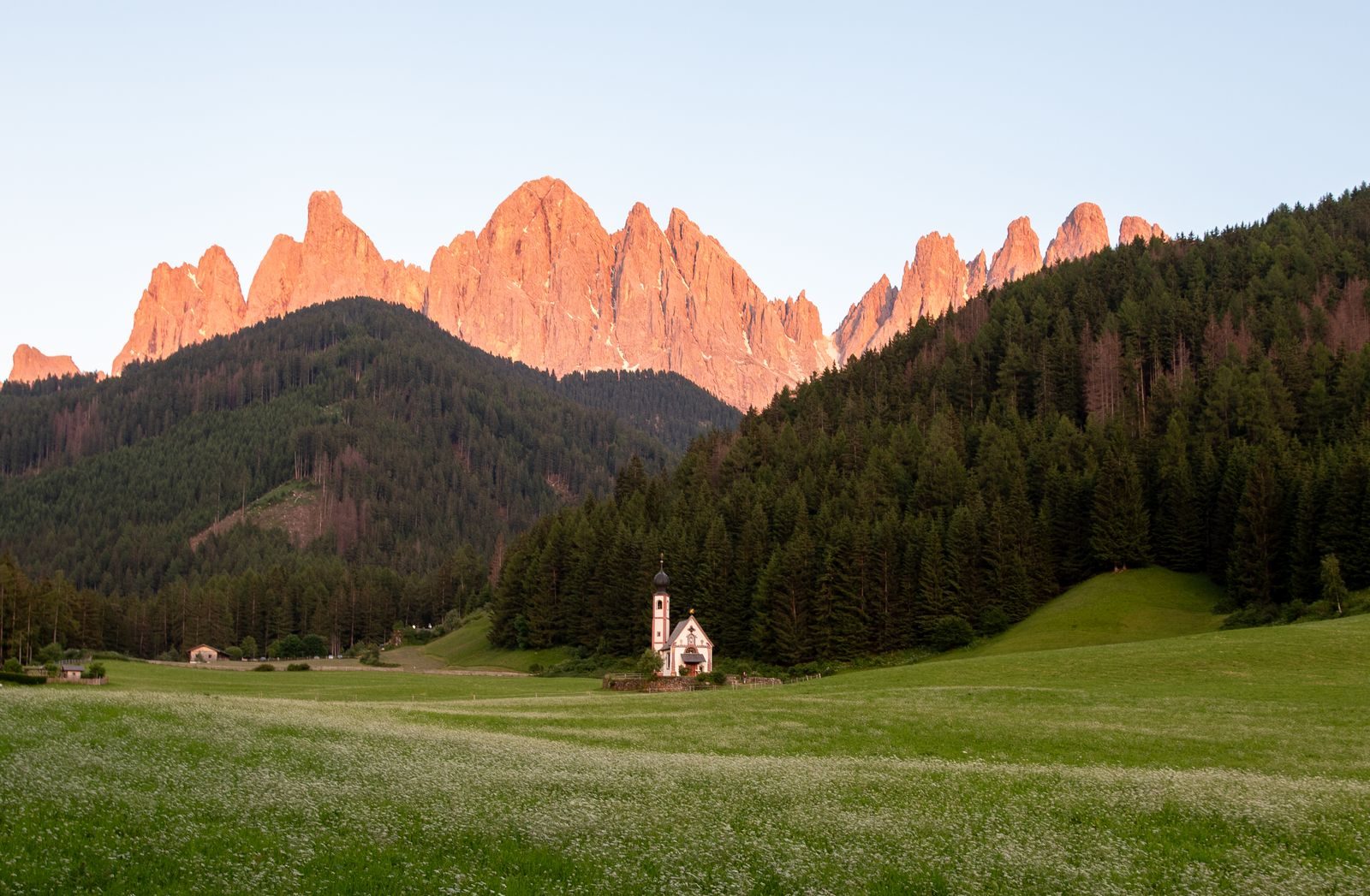
For a first trip, stay in Ortisei and Val Gardena, where lifts go straight up to Seceda and the Alpe di Siusi. Add Cortina d’Ampezzo for the eastern sights: the Tre Cime di Lavaredo, Cinque Torri and Lago di Sorapis. Choose Alta Badia for food and calm, Val di Funes for the famous church-and-peaks view, and Val Pusteria if Lago di Braies is high on your list.
The Dolomites are not one place but a cluster of mountain groups split by valleys and high passes, and the drive between two famous viewpoints can take far longer than the map suggests. That is why the best plan for a week is two bases, one in the west and one in the east, rather than one hotel and long days in the car.
The quick answer
| Base | Best for | The feel | The trade-off |
|---|---|---|---|
| Ortisei (Val Gardena) | First trip, lifts, hiking | Lively Alpine village, South Tyrol | Busy in August |
| Selva and Santa Cristina | The Sella passes, skiing | Quieter villages up the valley | Fewer restaurants than Ortisei |
| Cortina d’Ampezzo | The eastern Dolomites | Chic, Italian, the biggest town | Higher prices; far from the west |
| Alta Badia | Food, calm, the Sella Ronda | Ladin villages, refined | Fewer budget options |
| Val di Funes | The postcard view, quiet | Farms and meadows | Few hotels; you need a car |
| Val Pusteria | Lago di Braies, the Tre Cime | Wide valley, good value | Further from the western sights |
| Bolzano | A city base, rain days, trains | South Tyrol’s capital | An hour or more to most trailheads |
Ortisei and Val Gardena: the best first base
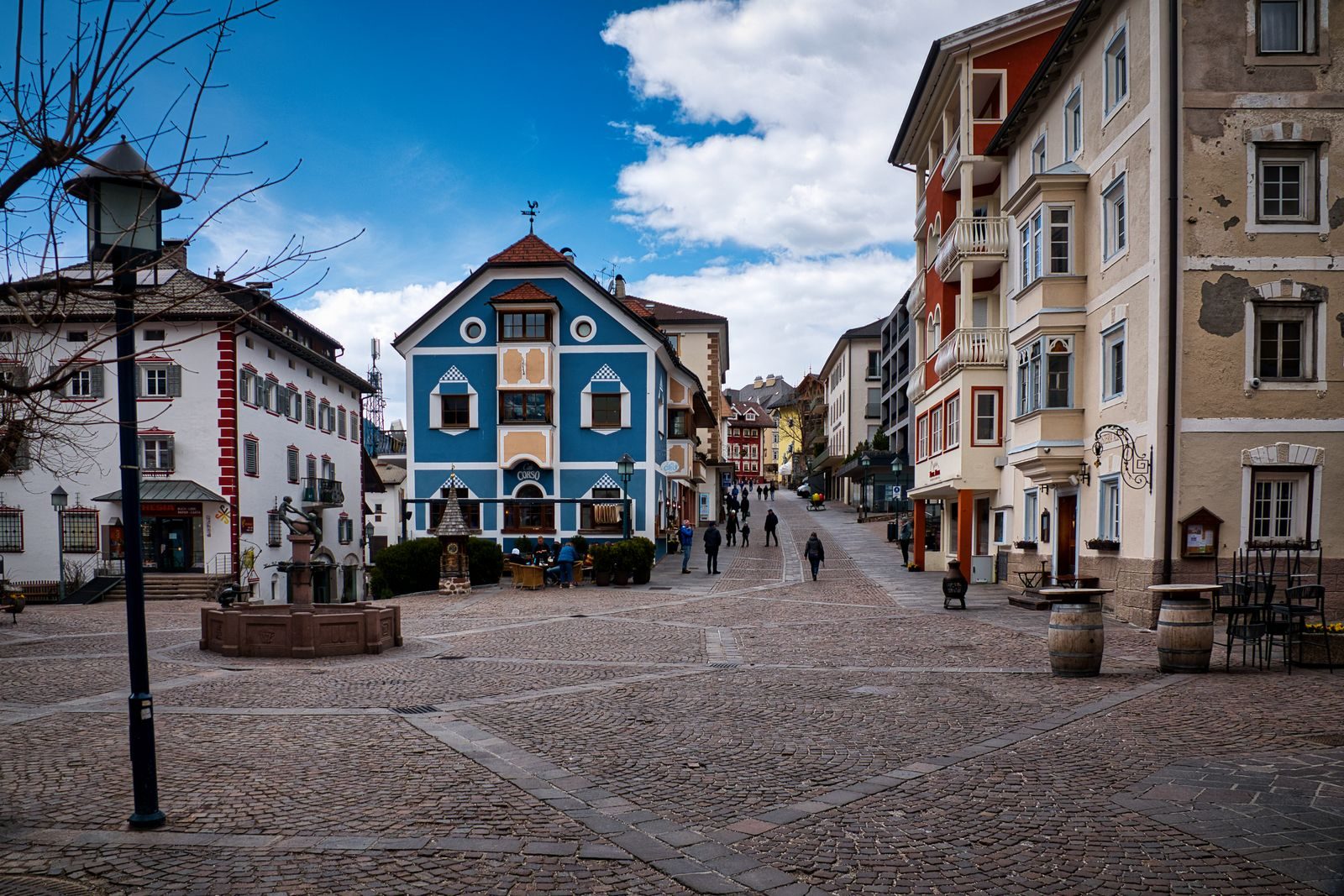
Ortisei (St. Ulrich in German) is the main village of Val Gardena and the easiest base for a first visit. From the village centre, one cable car climbs towards Seceda, with its famous tilted ridge, and another rises to the Alpe di Siusi, the vast high pasture with the Sassolungo behind it. It is a real town, with bakeries, woodcarving shops, restaurants and a lively evening walk, and the valley is a mix of German, Italian and the local Ladin language.
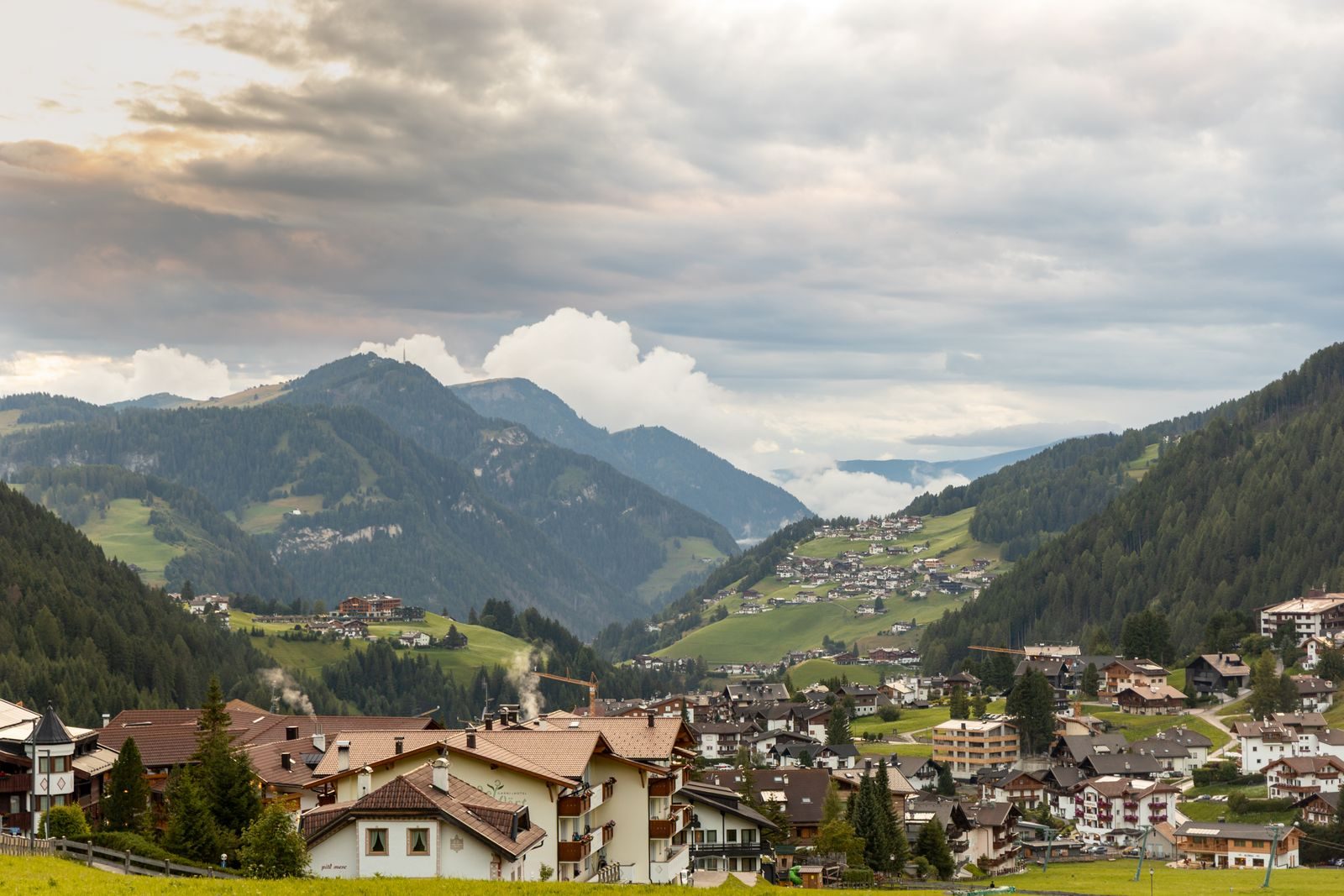
Further up the valley, Santa Cristina and Selva are quieter and closer to the Sella group and the Gardena pass. They suit hikers who want to start high, and skiers in winter.
Where to book:
- Stays in Ortisei (lifts to Seceda and Alpe di Siusi)
- Stays in Selva di Val Gardena (quieter, near the Sella passes)
See nearby: Ride up to Seceda early for the ridge before the clouds build, walk across the Alpe di Siusi meadows, and book a Dolomites hiking or photo tour if you would rather not plan the trails yourself.
Val di Funes: the postcard, without the crowds
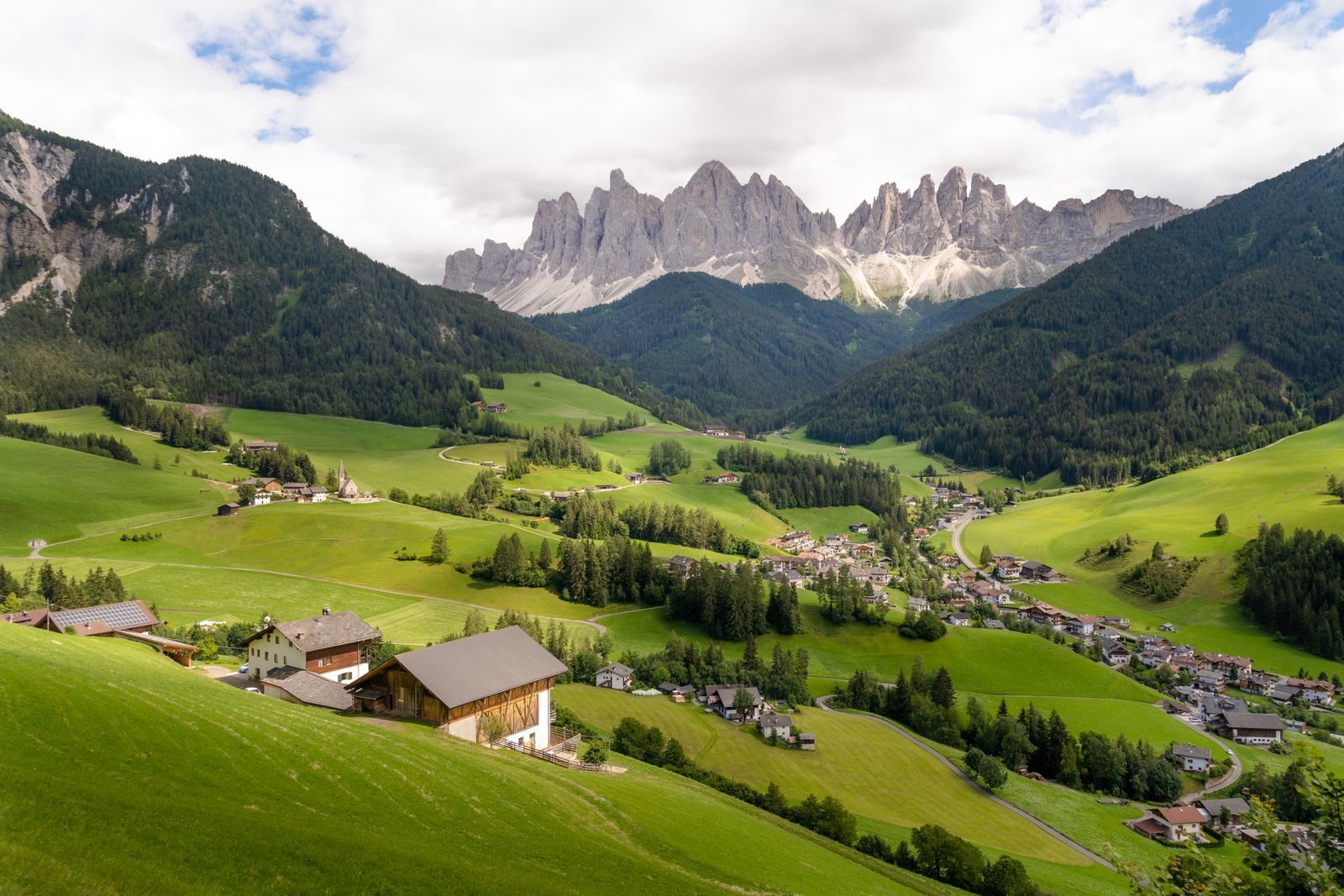
The view of a small church in a meadow beneath a wall of jagged peaks is Val di Funes, the quiet valley below the Odle (Geisler) group, close to Bressanone. It is a farming valley with a handful of guesthouses and small hotels, cowbells, and trails along the foot of the peaks. Stay here for peace and for first light on the mountains, and accept that there is little nightlife and you will need a car.
Where to book:
- Stays in Val di Funes (farm stays and small hotels)
See nearby: Walk the Adolf Munkel trail under the Odle peaks, and be at the church viewpoints at sunrise or sunset, when the rock glows and the coach groups have gone.
Cortina d’Ampezzo: the base for the east
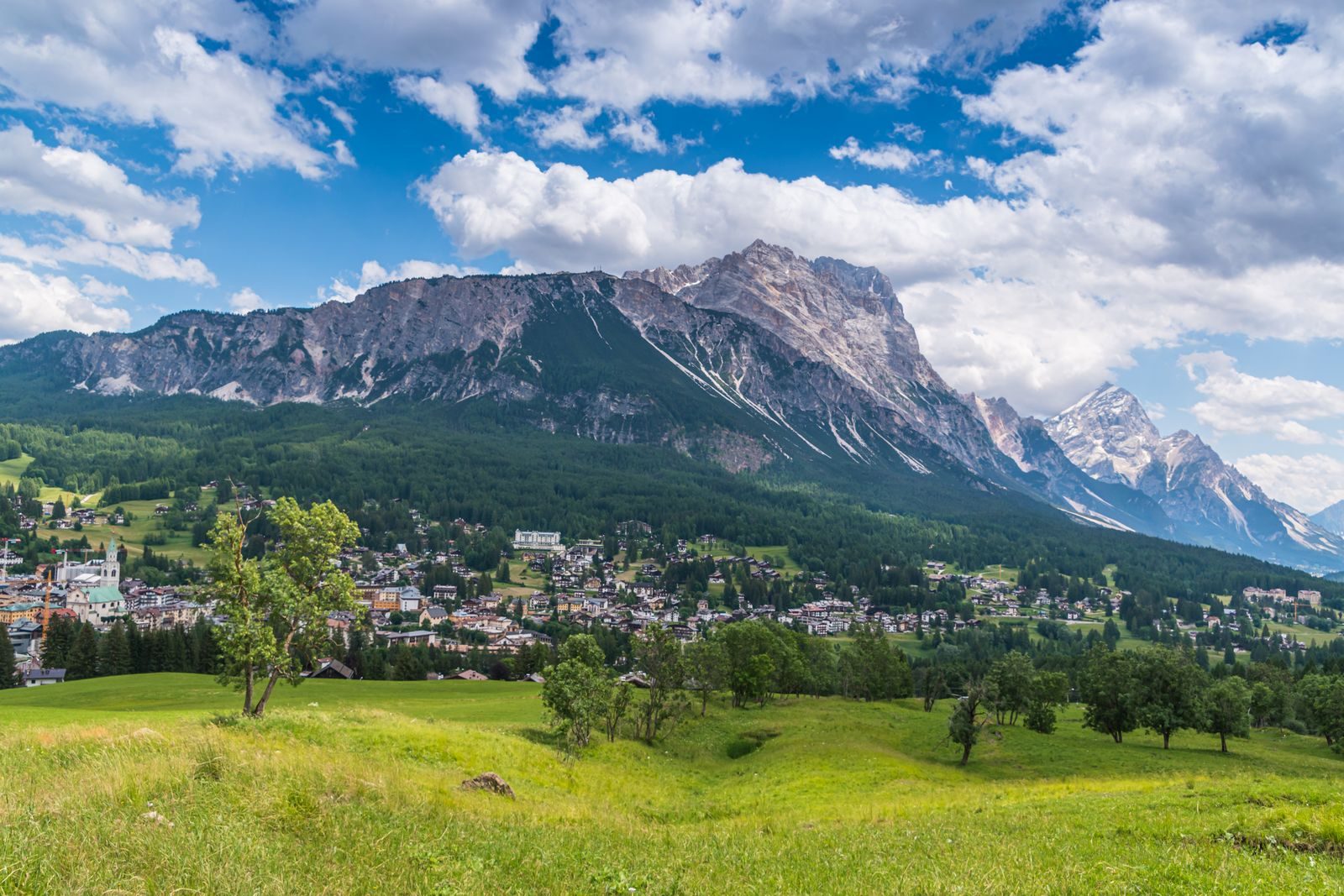
Cortina d’Ampezzo is the biggest and most glamorous town in the range, set in a wide basin ringed by peaks. It hosted the Winter Olympics in 1956 and co-hosts the 2026 Games with Milan. More usefully, it is the best base for the eastern Dolomites: the Tre Cime di Lavaredo, Lago di Sorapis, Cinque Torri and the Giau and Falzarego passes are all close. It has the most restaurants and shops in the Dolomites, and prices to match.
Where to book:
- Stays in Cortina d’Ampezzo (the eastern Dolomites)
See nearby: Hike the loop around the Tre Cime from the Auronzo hut, walk up to the milky-blue Lago di Sorapis, and take the lift to Cinque Torri for the open-air First World War trenches. The toll road to the Auronzo hut fills early in summer, so check whether you need to book.
Alta Badia: food and quiet
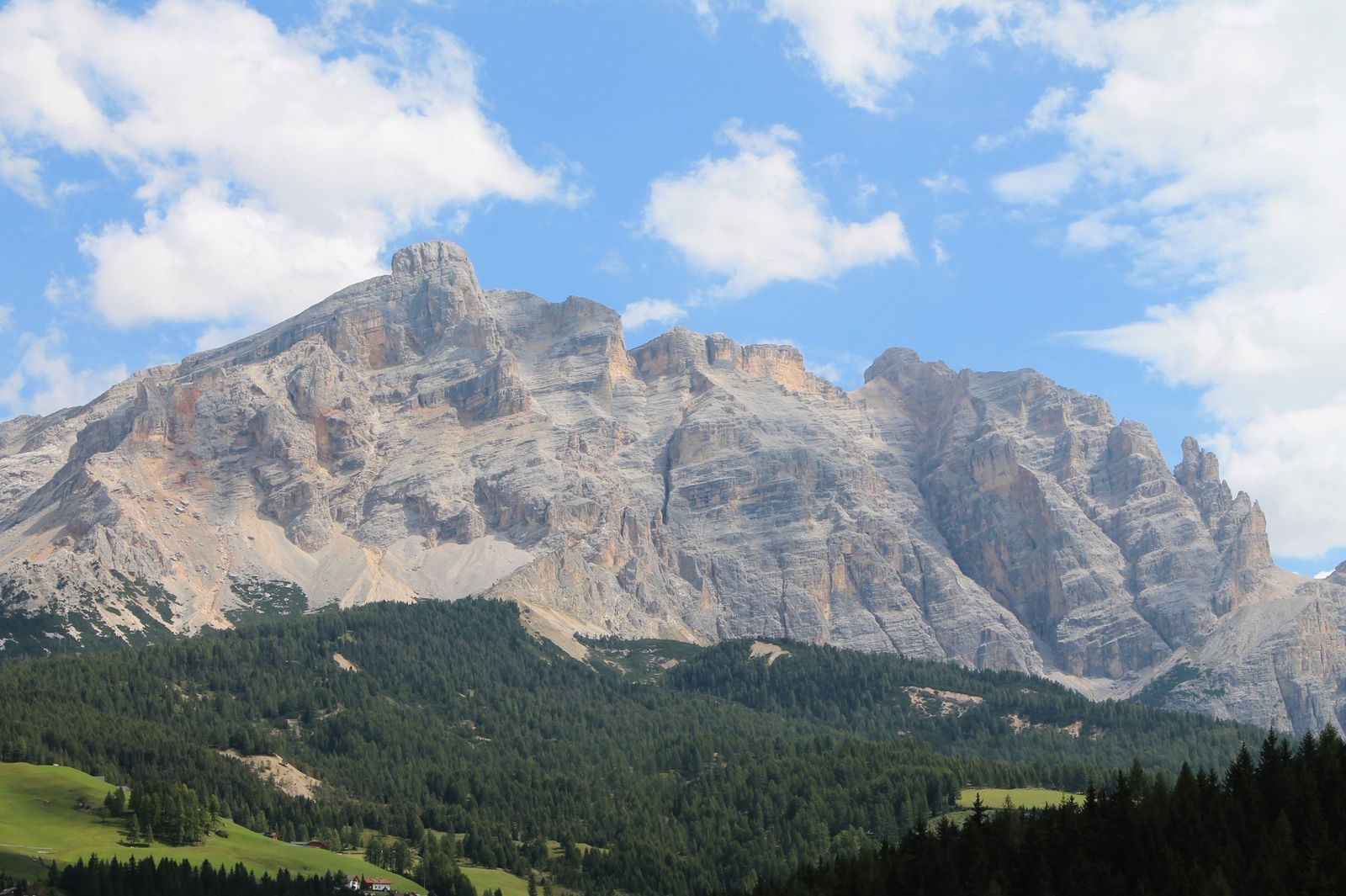
Between Val Gardena and Cortina, Alta Badia is a string of Ladin villages: Corvara, Colfosco, La Villa and San Cassiano. It is calmer and more refined than Val Gardena, known for some of the best food in the Alps, from mountain huts to acclaimed restaurants, and it sits on the Sella Ronda, the famous loop around the Sella group. A good base for couples, and a fair compromise if you want one base between east and west.
Where to book:
- Stays in Alta Badia (Corvara, La Villa, San Cassiano)
See nearby: Drive or cycle the Gardena and Campolongo passes, and eat lunch at a mountain hut with a view, which here is a serious meal rather than a snack.
Val Pusteria: Lago di Braies and the Tre Cime from the north
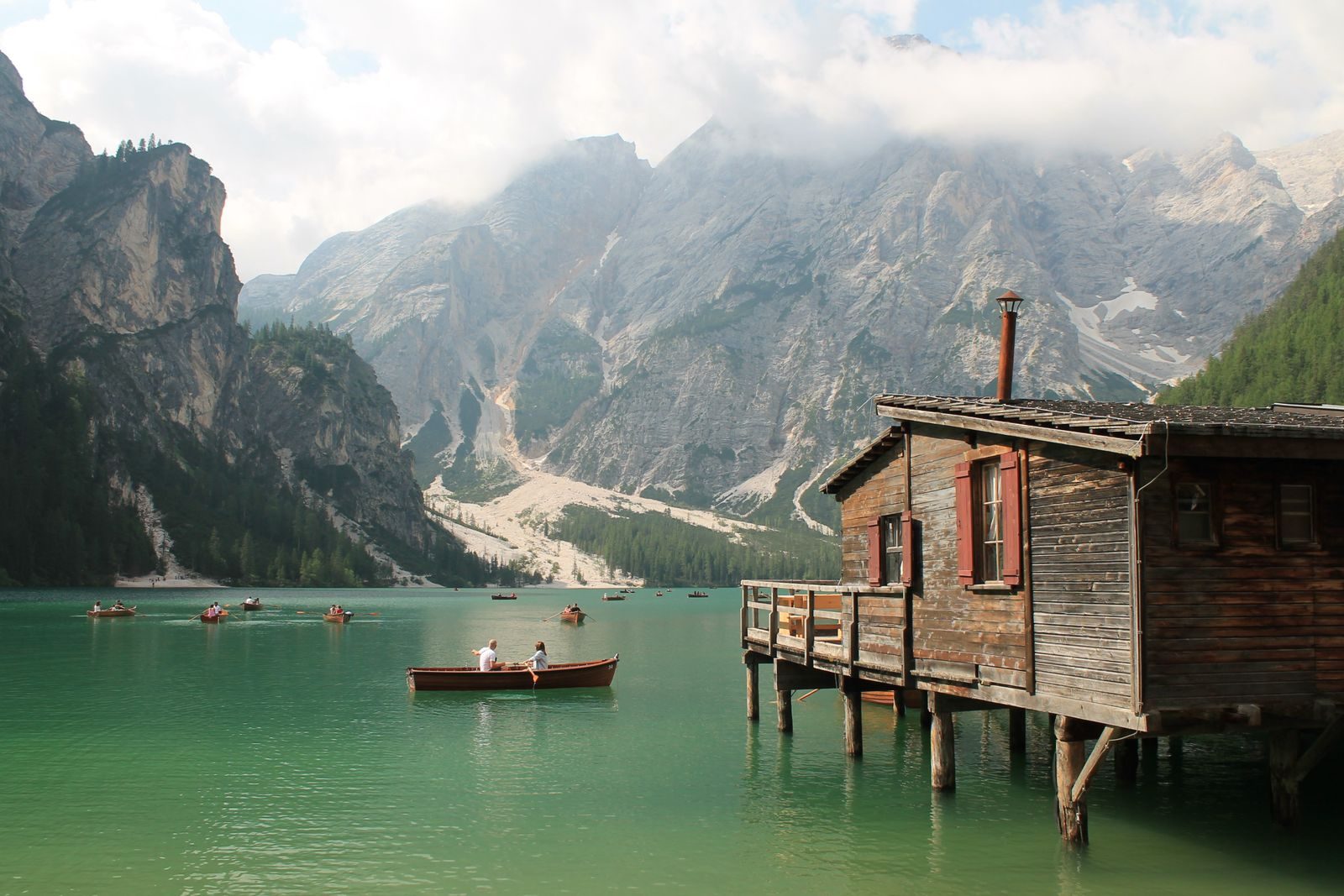
The wide valley of Val Pusteria runs along the northern edge of the range. Its villages, Dobbiaco, San Candido, Villabassa and Sesto, are the closest bases for Lago di Braies, the lake with the wooden boathouse, and for the northern approach to the Tre Cime. Rooms tend to be better value than in Cortina or Val Gardena. In midsummer, car access to Lago di Braies is restricted during the day unless you have booked parking, so staying nearby lets you arrive early.
Where to book:
- Stays in Dobbiaco and San Candido (near Lago di Braies)
- Stays in Sesto (for the Tre Cime from Val Fiscalina)
See nearby: Rent a rowing boat at Lago di Braies at opening time and walk the loop around the lake before the day crowds arrive.
Bolzano: the city base
Bolzano, the capital of South Tyrol, is a handsome arcaded town with fast trains from Verona and Innsbruck and the museum of Ötzi, the ice man. It is a good first or last night and a smart choice for rainy days, but most trailheads are an hour or more away, so it is not the place to spend a hiking week.
Where to book:
- Stays in Bolzano (trains, old town, rain-day museums)
Which base for your trip?
- First trip, one base: Ortisei.
- A week, two bases: Ortisei or Val di Funes, then Cortina or Val Pusteria.
- The Tre Cime and the eastern lakes: Cortina, or Sesto in Val Pusteria.
- Lago di Braies: Dobbiaco or San Candido.
- Food and calm: Alta Badia.
- The quietest stay: Val di Funes.
- Arriving by train: Bolzano, then the bus up to Val Gardena.
Getting around
A car is the easiest way to see the Dolomites: the best views are spread across valleys joined by high passes, and early starts beat both the crowds and the afternoon clouds. Expect the passes to be slow in summer, with cyclists and motorbikes on every bend. Compare car rentals in Italy, ideally picking up in Bolzano, Verona or Venice.
Buses link the main villages in summer, and many hotels in South Tyrol give guests a card for local transport, so a single well-placed base without a car is possible. You will simply see less of the range.
The hiking season runs from about mid-June to mid-September, when the lifts and mountain huts are open; September is the quietest part of it. Many lifts and hotels close between the seasons, in spring and in late autumn, so check before you book an off-season trip. Winter brings skiing on the huge Dolomiti Superski network.
A note on how we write about cost: we do not publish exact prices, because they move sharply between August and the shoulder months. As a broad rule, Cortina and Val Gardena cost the most, and Val Pusteria and the smaller valleys are better value for a similar standard.
Watch the films
- Six days in the Dolomites by car: the loop from Bolzano
- 8 places in Italy that are not Rome or Venice
- Autumn in Europe: 8 places at their best in October
Choose your two valleys, set the alarm for sunrise, and the Dolomites do the rest.