Croatia · Itineraries
One week in Croatia by car: Dubrovnik to Zagreb
A week is enough to drive the length of Croatia one way, from Dubrovnik to Zagreb. The route follows the coast north to Split, stops at Krka National Park and Zadar, then turns inland to Plitvice Lakes and the capital. It is about 680 kilometres and ten hours of driving, so fly into one city and out of the other.
Day by day
- 1
Dubrovnik
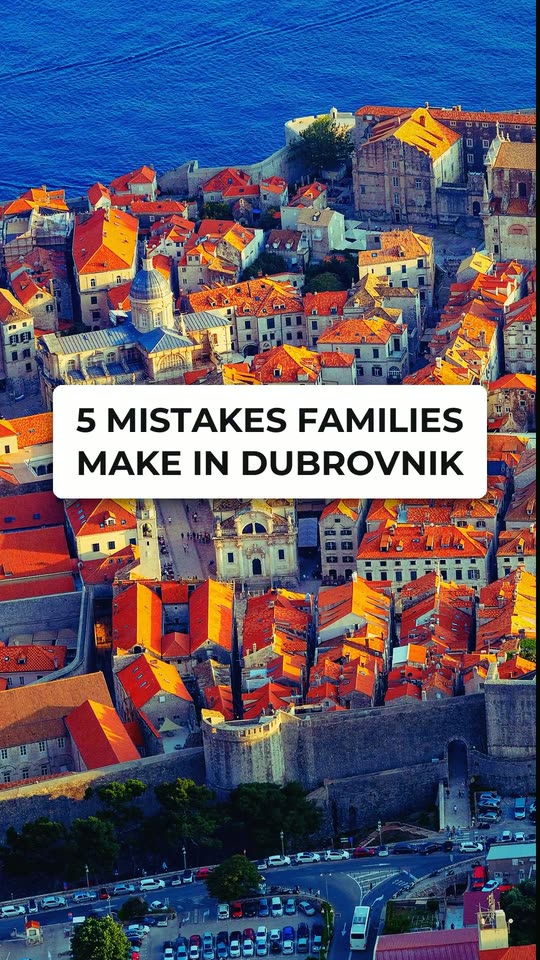
Two nights. The old town is a walled city on the sea, with marble streets and no cars inside the gates. The walk along the top of the walls is about two kilometres and takes up to two hours, with the rooftops on one side and the Adriatic on the other. Do it at opening time or near closing to avoid the heat and the cruise crowds. A cable car climbs Mount Srđ for the view from above. Pick up the rental car when you leave, since parking near the old town is scarce.
- 2
Split
The longest drive, over three hours north. Since the Pelješac Bridge opened in 2022 the route stays inside Croatia with no border crossing. Split's old town grew inside the palace the Roman emperor Diocletian built around the year 300, and people still live and work within its walls. The cathedral bell tower, the cellars and the seafront promenade are all a few minutes apart. Two nights allow a day trip by ferry to one of the nearby islands, or to the small walled town of Trogir.
- 3
Krka National Park
A stop of three to four hours on the way to Zadar. The river Krka drops over a long series of travertine cascades, and wooden boardwalks loop through the trees around the largest group, Skradinski Buk. The loop takes about an hour at walking pace. Swimming at the main falls has been banned since 2021 to protect the rock. Enter at Lozovac, or from the town of Skradin, where a boat runs up to the falls in season. Arrive before midday in summer.
- 4
Zadar
One night. Zadar is a compact old town on a peninsula, with Roman ruins, a round ninth-century church and a seafront that faces west. At the tip of the promenade, the Sea Organ is a set of stone steps with pipes underneath that sound as the waves push air through them. Next to it, a large circle of glass panels lights up after dark. People gather here for sunset. The town is flat and easy to cover on foot in an afternoon and an evening.
- 5
Plitvice Lakes
A little over two hours inland. Plitvice is a chain of sixteen lakes on different levels, joined by waterfalls and crossed by wooden boardwalks. The park has marked routes of different lengths, with a boat across the largest lake and shuttle buses along the ridge. Entry is by timed ticket for a set entrance, sold online, and summer slots sell out. Swimming is not allowed anywhere. Stay the night nearby and go in at opening time, when the paths are empty and the light is soft.
- 6
Zagreb
The end of the route, about two hours north. Zagreb's upper town is a small hilltop quarter of cobbled streets, reached on foot or by a short funicular. St Mark's Church, with its roof of coloured tiles showing two coats of arms, stands in the main square. The lower town has parks, museums and a large open-air market. Drop the car at the airport or in town on arrival. Most visitors spend an afternoon and evening here before flying home.
Tour links are partner links. They cost you nothing and help keep the guides free. How this works.
Plan it
- Best time
- May, June and September for warm weather without the peak crowds. July and August are hot and busy on the coast. Plitvice is good in spring, when the water is high, and in autumn colour.
- How long
- Seven days one way. With ten, add an island such as Hvar or Korčula between Dubrovnik and Split.
- Getting around
- A one-way car rental from Dubrovnik to Zagreb, or the reverse. Croatian motorways charge tolls by distance, not by vignette. One-way rentals within Croatia usually carry a drop-off fee.
Good to know
- Buy Plitvice tickets online for a set time before the trip in summer.
- The old towns are car-free. Choose places to stay with parking, or leave the car in a public garage.
- Check the cruise ship schedule for Dubrovnik and walk the walls on a quieter day.
Frequently asked
Is one week enough for Croatia? +
Yes, for one line through the country. A week covers Dubrovnik, Split, one or two national parks and Zagreb. It does not leave time for the islands or Istria. With two weeks, add Hvar or Korčula and a few days in the north.
Do you cross a border driving from Dubrovnik to Split? +
Not any more. The Pelješac Bridge, opened in 2022, links the Dubrovnik region to the rest of Croatia and bypasses the short strip of Bosnia and Herzegovina at Neum. The coast road through Neum is still open if you want it, with passport checks at both ends.
Can you swim at Krka or Plitvice? +
Not at the main sights. Swimming has been banned at Plitvice for years and at Krka's main waterfall, Skradinski Buk, since 2021. Krka still allows swimming at a few marked spots elsewhere in the park during summer.
Should you start in Dubrovnik or Zagreb? +
Either works. Starting in Dubrovnik puts the long coastal drive first and ends with an easy day in the capital. Starting in Zagreb saves the sea for the end. Flight times and fares usually decide it.