Some places look so unlikely that your first instinct is to assume the photo is fake. A lake that’s bright pink. A hillside of white travertine pools. A cliffside village stacked over a caldera like spilled sugar. You scroll past thinking that’s been edited.
Most of the time, it hasn’t. The place is genuinely doing that. What the photo doesn’t tell you is the part that actually matters: these places only look like the photo for a few hours, in a few months of the year, from one specific spot. Get the timing wrong and you’ve flown across the world to see a grey version of the postcard.
This is the short version of a field guide we put together for exactly that reason. Not where these places are (a search will tell you that), but when and how to be standing there when they look unreal.
The ones that look invented (but aren’t)
Santorini’s caldera, Greece. The white-and-blue stack over the water is real; what ruins it is arriving midday when half of Oia is in the same photo as you. The village looks like the picture at first light, before the cruise crowds, or in the last twenty minutes before sunset. See our take on the Greek islands worth the flight.
Pamukkale, Türkiye. The white travertine terraces filled with turquoise water look computer-generated. They’re mineral deposits, thousands of years old. The water is only that colour in direct sun. On an overcast day the whole hillside goes flat and chalky.
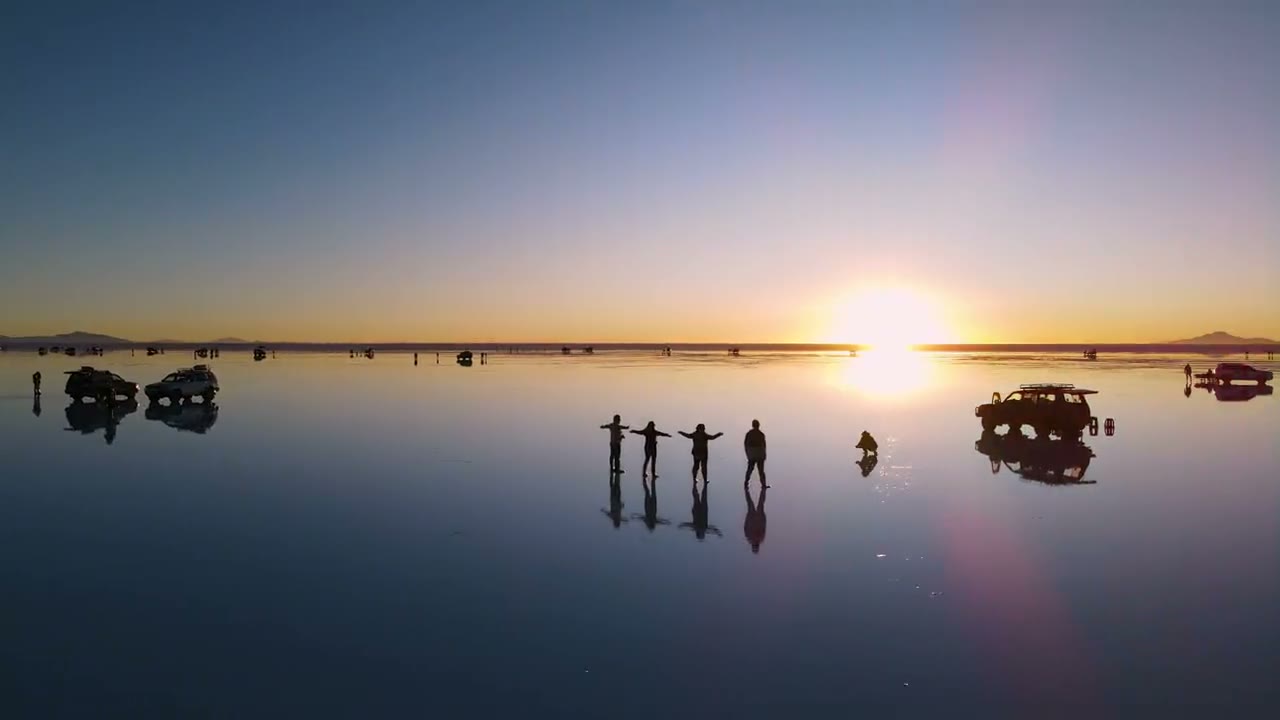
A salt flat in the wet season. When a thin layer of water sits on the salt, the ground becomes a perfect mirror and the horizon disappears. In the dry months it’s just a white crust. Same place, completely different photo, entirely dependent on the calendar.
A volcanic crater lake at dawn. Some of them glow an electric blue-green from dissolved minerals, and a few release sulphur that burns with a blue flame visible only before sunrise. By mid-morning the colour washes out and the crowds arrive.
Terraced rice fields in the growing season. The mirror-step look that made them famous only happens for a few weeks a year, when the paddies are flooded and freshly planted. Outside that window you get green, or brown, but not the staircase of sky.
A sea cave the sun reaches into. The ones that glow turquoise from the inside only do it when the sun is low enough and the sea calm enough for light to bounce up through the water. That’s a morning-and-weather lottery, which is exactly why the photo feels rare.
The pattern repeats everywhere: the place is real, the photo has conditions. Light, season, hour, weather, and the one viewpoint most people walk straight past.
Why we care about the timing
We make short videos about places like these, and the single most common comment is some version of “that can’t be real.” It is. But we also hear from people who went and were disappointed, and almost every time, they went at the wrong hour or the wrong month and assumed the internet had lied to them.
It hadn’t. They just missed the schedule. A beautiful place on a flat grey afternoon is a different place.
How to not waste the trip
A few rules that hold almost everywhere:
- Golden hour is not a cliché, it’s the whole thing. First and last light do most of the work in these photos. Plan the famous shot for sunrise, when you also skip the crowds.
- Check the season before the flights, not after. Mirror effects, flower blooms, flooded terraces and even waterfall volume are seasonal. The place has an on-switch; find out when it’s flipped.
- Weather beats everything. Turquoise water needs sun. A mirror needs still air. Build a spare day into the trip so one cloudy morning doesn’t cost you the reason you came.
- Learn the one viewpoint. Most iconic shots come from a single spot that isn’t the obvious one. Ten minutes of research before you go saves an hour of wandering when you’re there.
Plan it properly
Tours and timed entries for the ones that need them (sea caves, permits, sunrise boats): GetYourGuide lists most of the official operators.
Somewhere to stay near the viewpoint. Being a 5-minute walk from the shot, not a 40-minute drive, is what lets you catch first light: Booking.com.
A rental car for the ones scattered along a coast or a ring road: DiscoverCars.
Travel insurance for the longer-haul ones: SafetyWing.
The full field guide
This is twelve of them. The complete guide covers 20 places, one spread each, with the exact season and hour each one looks like the photo, how to reach it without a tour you don’t need, and a month-by-month planner so you can see which place is at its best when. It’s a designed PDF, priced like a coffee. Have a look in the shop.
Related reading
- Forget Santorini: the Greek islands actually worth the flight
- 6 destinations at half the price of the obvious ones
- Why we made Drift Vistas
Affiliate disclosure: some links above are partner links that cost you nothing and help keep the free guides free. How this works.